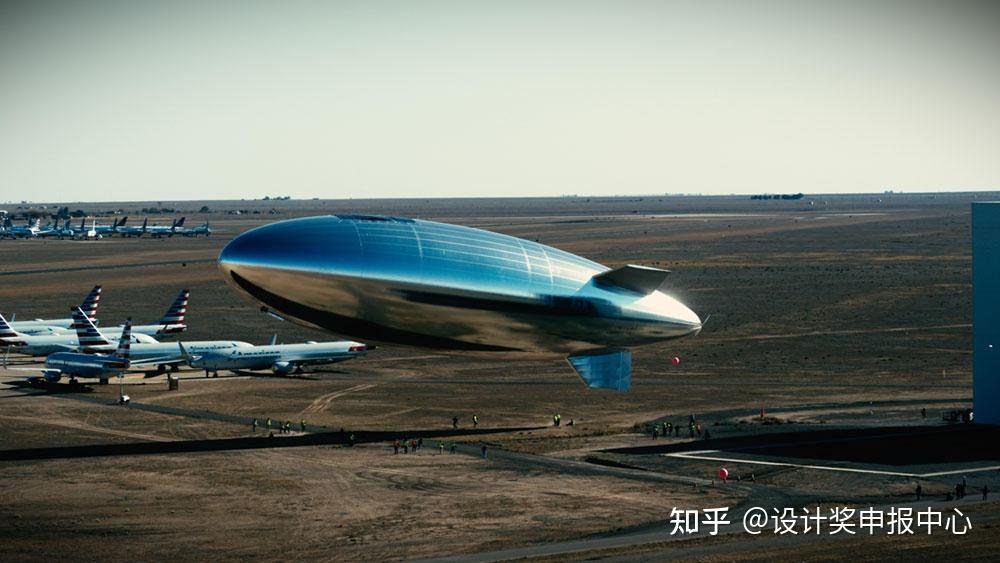
How Sceye’s Stratospheric Airships Track Greenhouse Gases
1. The Monitoring Gap Could Be Bigger Than Most People Realise
Global greenhouse gas emissions are tracked by means of a plethora of ground stations, periodic spacecraft campaigns, as well satellites that fly hundreds of miles over the Earth’s surface. Each of these has its own limitations. Ground stations are not as extensive and geographically oriented toward wealthy nations. Aircraft travel is costly brief-duration, limited in duration, and small in their coverage. Satellites provide global coverage, but are not able to attain the spatial precision needed to pinpoint particular emission sources like leaky pipelines, a landfill venting methane or an industrial plant that has not reported its output. This results in the monitoring system has significant gaps at precisely the extent where accountability and control have the greatest impact. Stratospheric platforms are becoming examined as the gaping middle layer.
2. A higher altitude can provide a better monitoring benefit Satellites can’t duplicate
There’s a geometries argument to explain why 20 kilometres outweighs 500 kilometres in terms of monitoring emissions. A sensor operating at a stratospheric altitude can observe a ground footprint of several hundred kilometres while being close enough recognize emission sources with meaningful level of resolution. These include individual facilities or road corridors. It can also distinguish agricultural zones. Satellites scanning the same region from the low Earth orbit cover it faster however with a smaller granularity and the times to revisit mean that a methane plume, which appears and fades away in a matter of hours won’t be captured. An instrument that keeps its location above the region of interest for days or weeks in a row transforms periodic snapshots into continuous surveillance.
3. Methane is a Priority Target for Good Reason
Carbon dioxide garners the most of the media attention, but methane is the greenhouse chemical where immediate improvements to monitoring can make the biggest practical difference. Methane’s potency is higher than CO2 for a time period of 20 years and a significant proportion of methane emissions from humans originate from single sources- pipelines and oil infrastructure along with waste facilities and farming operations, etc. These can be detected and often fixable once discovered. Monitoring of methane in real time from an ever-present stratospheric platform will mean operators, regulators, and governments can identify leaks as they occur rather than identifying them in the months following annual inventory reconciliations that typically rely on estimates rather than actual measurements.
4. Sceye’s Airship Model is Affitting to the Monitoring Mission
The factors that define an excellent telecommunications platform as well as a top environmental monitoring platform cross-pollinate more than you believe. Both require long endurance in stable positioning and important payload capacities. Sceye’s lighter airship strategy takes care of all three. Because buoyancy helps with the fundamental job of keeping the aircraft in a safe position so the platform’s power consumption doesn’t get sucked up by lifting It’s used for propulsion and station keeping and powering the sensor is required for the mission. When it comes to monitoring greenhouse gases, specifically this includes carrying imaging systems, spectrometers, and data processing hardware without the brutal weight constraints that make fixed-wing HAPS designs unsuitable.
5. Station Keeping is not a matter of negotiation for useful environmental data
A monitoring platform that is prone to drift is a monitoring system that creates data that’s hard to comprehend. Knowing exactly where a sensors was when it recorded a reading is critical to attribution of that reading to the source. Sceye’s emphasis on station keeper — a person who holds an unmoved position over a region of focus by active propulsion doesn’t only serve as an indicator of performance on a technical level. It’s the reason why the data is legally valid. Stratospheric earth observations are only essential for regulatory or legal requirements when the positional record is solid enough to stand up to scrutiny. Drifting balloon platforms despite how competent their sensors are, won’t provide this.
6. The same platform is able to monitor Oil Pollution and Wildfire Risks Simultaneously
One of the most exciting advantages of the multi-payload concept is the way that different environmental monitoring missions work together on the same vehicle. An airship that operates over the ocean or in coastal areas can carry sensors that have been calibrated for oil pollution detection, in addition to those tracking methane or CO2. Over land, the same platform architecture allows for wildfire detection technology, which identifies smoke plumes, heat signatures as well as stress indicators for the vegetation that indicate ignition triggers. Sceye’s design approach to mission development doesn’t consider them as separate programmes requiring separate aircraft but as parallel use cases for infrastructure already placed and operating.
7. Detecting Climate Disasters with real-time changes the Response Equation
There’s an essential difference between knowing a wildfire started within six hours and knowing it started twenty minutes from now. The same holds true for industrial accidents releasing toxic gases, floods that are that threaten infrastructure, or sudden methane releases from the permafrost. Being able to spot climate disasters in actual the time of a persistent stratospheric platform provides emergency managers authorities, government agencies, as well as industrial operators the opportunity to intervene that doesn’t exist when monitoring relies on ground-based or satellite revisit cycle reports. The value of that window increases when you realize that the beginning stages of the majority of environmental emergencies are in the same timeframes when intervention is most effective.
8. This Energy Architecture Makes Long Endurance Monitoring Possible
Environmental monitoring missions will only bring their value fully if the platform remains on the station for long enough so that it can create an accurate data record. A week’s worth methane readings across an oil field can tell you something. Months of continuous data tells the user something that can be implemented. For that to happen, you need to address the problem of night-time energy — the platform must maintain enough power throughout daylight hours to sustain any system during the evening without affecting their position or the operation of sensors. Modern advances in lithium sulfur battery chemistry, with energy densities around 425 Wh/kg. Combined with an improvement in solar cell efficiency are what make a closed power loop possible. The absence of either remains simply an aspiration, rather than a definition.
9. Mikkel Vestergaard’s Backstory Explains the importance of the environment
It’s important that you understand why a stratospheric aerospace firm puts such obvious emphasis on greenhouse gas monitoring and disaster prevention rather than being a leader solely in connectivity revenue. Mikkel Vestergaard’s record of applying technology to massive environmental and humanitarian issues gives Sceye its foundational philosophy, which is reflected in the goals that the company prioritizes and how it communicates its platform’s role. The capabilities for monitoring the environment aren’t a side-payload added on to make a telecoms vehicle look more socially responsible. They show a real conviction that the stratospheric system should be doing climate work, and that the same platform can achieve both without compromising the other.
10. It is important to understand that the Data Pipeline Is as Important as the Sensor
Gathering data on greenhouse gas emissions from the stratosphere is not all the problem. Getting the information to people who need it, in a form that they can act on, in something near real-time, is the second half. A stratospheric platform that has onboard processing capability and direct downlink to ground stations may reduce the time between decision and detection significantly in comparison to systems that process data for later analysis. For applications that manage natural resources like regulatory compliance monitoring or emergencies, the speed of the information can be crucial as much as its accuracy. Incorporating that data pipeline into the platform’s structure from the beginning, rather than thinking of it as an afterthought is a key element that is distinct about serious stratospheric terrestrial observation from non-deliberate sensor campaigns. Follow the recommended sceye haps airship specifications payload endurance for blog info including Stratosphere vs Satellite, Stratospheric infrastructure, what is haps, sceye aerospace, sceye services, softbank sceye partnership, Beamforming in telecommunications, softbank sceye haps japan 2026, non-terrestrial infrastructure, Sceye News and more.
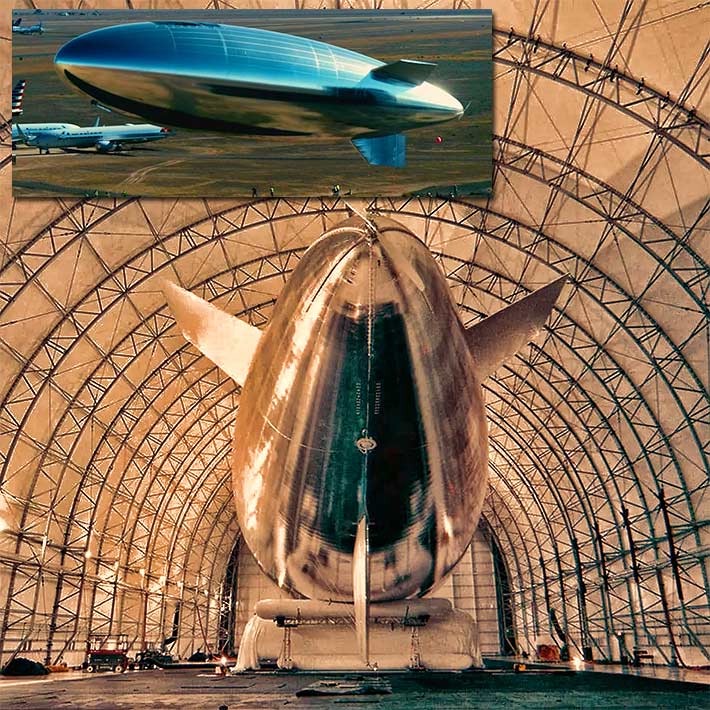
Search For Wildfires And Other Disasters From The Stratosphere
1. The Detection Window Is the Most Useful Thing You’ll Be able to Extend
Every big disaster has a point which can be measured in seconds, sometimes it’s hours when the early awareness could have altered the outcome. A wildfire spotted when it covers a quarter of hectare is a containment problem. The fire which was discovered when it covers fifty hectares is a catastrophe. An industrial gas leak detected in the initial twenty minutes can be dealt with before it is a public health emergency. The same release discovered within three hours, triggered by either a ground report or satellite passing overhead during its scheduled visit, has already turned into a problem for which there is no clear solution. Expanding the detection windows is arguably the single most valuable aspect that a better monitoring infrastructure could provide, and the constant stratospheric monitoring is among those few techniques that can change the window to a significant degree rather than small changes.
2. Wildfires are becoming harder to Control Using the Existing Infrastructure
The intensity and frequency of wildfires of recent decades has overtaken the monitoring infrastructure developed to track the fires. Sensors on the ground- sensors, watchtowers and watchtowers ranger patrols — cover too little area too slow to detect fast-moving burning fires during the initial stages. Aircraft response is effective but expensive, weather-dependent and is reactive, not anticipatory. Satellites pass through a place on a schedule that is measured in hours, which means that a fire that erupts, spreads, and crowns between passes is not accompanied by any warning at all. The combination of more fires, faster spread rates driven through drought, as well as complicated terrain creates an observation gap that conventional approaches can’t close structurally.
3. Stratospheric Altitude Provides Persistent Wide-Area Visibility
A platform that operates from 20 kilometres or more above the ground can guarantee continuous visibility over a ground area that covers several hundred kilometres — which includes areas of high risk for fire, coastlines, forest margins, and urban interfaces, all without interruption. Contrary to aircrafts and helicopters, this platform doesn’t have to return to fuel. Contrary to satellites, it does not disappear over the horizon on the repetition cycle. In the case of wildfire detection, this continuous wide-area view means that the platform is observing when the fire is ignited, watching as flames begin to spread, and following the changes in fire behavior and provides a continuous data stream instead of a collection of disconnected snapshots emergency managers must cross-check between.
4. Heating and Multispectral Sensors Are able To Detect Fires before smoke is visible.
Some of the most useful technology for detection of wildfires does not wait for visible smoke. Thermal infrared sensors detect heat anomalies consistent with ignition before an event has generated any visible signature — by identifying hotspots inside dry vegetation, glowing ground fires under the canopy of forests and the initial evidence of the heat signature that indicates fires are just beginning to build up. Multispectral imaging further enhances the capability through the detection of changes in vegetation conditions such as moisture stress dryness, browning, and drying- that indicate elevated flame risk in particular regions before any ignition occurs. A stratospheric platform equipped with the combination of these sensors will provide an early warning of active ignition and an in-depth understanding of where the next ignition is most likely to occur. This offers a qualitatively broader range of awareness that conventional monitoring.
5. Sceye’s Multi-Payload Methodology Combines Detection With Communications
One of the practical complications in major disasters is that the infrastructure they rely on to communicate like mobile towers power lines, internet connectivity is typically one of the first elements to be destroyed or flooded. A stratospheric-based platform carrying sensor for disaster detection as well as a communication payloads address this issue using a single vehicle. Sceye’s approach to mission development treats connectivity and observation as functionally related rather than competing ones, which means the system that detects a fire in progress can also send emergency communications to responders at the ground who’s terrestrial networks are dark. The mobile tower in the sky isn’t only able to see the catastrophe and keeps the people connected by it.
6. The Detection of Disasters extends well beyond Wildfires
While wildfires can be considered one of many compelling applications that require constant monitoring of stratospheric conditions, the same platform capabilities apply across a broader range of disaster scenarios. Floods can be tracked for their progress across river systems and coastal zones. Earthquake debris — including compromised infrastructure, blocked roads and population displacementbenefit from rapid broad-area assessments that ground teams don’t provide quickly enough. Industrial accidents that release polluting gases and toxic gasses to coastal waters cause signatures easily detectable by the appropriate sensors from stratospheric altitude. The ability to detect climate disasters in a real time across those categories requires an observation layer that is continuously present at all times, watching constantly, and able to distinguish between the typical environmental variations as well as the signs of evolving crises.
7. Japan’s infamous disaster record makes the Sceye Partnership Particularly Relevant
Japan has an disproportionately large portion of the world’s most significant seismic occasions, experiences regular typhoon seasons affecting populated coastal regions, and has many industrial accidents which require rapid environmental monitoring. The HAPS collaboration has been formed between Sceye and SoftBank targeted at Japan’s nationwide network and the pre-commercial services to be launched in 2026, is situated at the intersection of stratospheric connectivity and disaster monitoring capabilities. A country that has Japan’s catastrophe vulnerability and technological sophistication is possibly the most likely early adopter to stratospheric connectivity that combines reliability in coverage with real-time surveillance that provides both the communications backbone that disaster recovery relies on, as well as the monitoring layer necessary for early warning systems.
8. Natural Resource Management Benefits From the same Monitoring Architecture
The sensor and persistence capabilities used by stratospheric platforms in preventing wildfires and detecting disasters can be applied directly to natural resource management. They operate over longer timescales, yet require similar monitoring frequency. Forest health monitoring that tracks disease spread in the form of illegal logging, vegetation change — gains from constant observation, which can identify slow-developing hazards before they reach acute. Monitoring of water resources across large areas of catchment, coastal erosion tracking, as well as the monitoring of protected areas against interference all have applications where the constant monitoring of a stratospheric system generates actionable data that regular trips to the satellite or expensive plane surveys can’t be replaced cost-effectively.
9. The Mission of the Founders Determines Why Emergency Detection is a Must
Understanding the reasons Sceye place such an emphasis on disaster detection and environmental monitoring and monitoring of environmental conditions — rather than looking at connectivity as the core mission and observation as a second-rate benefitneeds to be aware of the underlying idea that Mikkel Vestergaard gave to the company. A background in applying advanced technology to massive humanitarian issues is a different set goals than a focused on commercial telecommunications. The ability to detect natural disasters isn’t retrofitted onto a connectivity platform as a feature that can be added value. It’s a result of a belief in the fact that the stratospheric network should be actively beneficial for all sorts of crises — climate catastrophes, environmental crises, emergency situations that require early and more accurate information improves outcomes for populations affected.
10. Persistent Monitoring Changes the Relationship between Data and Decision
The greater shift that provides stratospheric disaster monitoring isn’t simply a quicker response to individual events the technology is a paradigm shift in the way that decision-makers view environmental risks over the course of time. When monitoring is infrequent, resources deployment decisions, preparedness for evacuations, and investing must be made under a great deal of uncertainty regarding circumstances. When monitoring is continuous the uncertainty is reduced dramatically. Emergency managers who use real-time data from an indefinite stratospheric base above their respective areas of responsibility have a distinct position of information compared to those who are relying on scheduled satellite passes and ground reports. That shift from regular snapshots to constant state-of-the-art awareness is the reason that stratospheric geo-observation by means of platforms such those developed by Sceye to be truly transformative rather than being incrementally useful. Check out the top rated softbank satellite communication investment for blog recommendations including what are high-altitude platform stations haps definition, softbank haps, whats the haps, sceye disaster detection, what are high-altitude platform stations, stratospheric internet rollout begins offering coverage to remote regions, softbank investment in sceye, Sceye Wireless connectivity, what are high-altitude platform stations haps definition, Sceye Softbank and more.